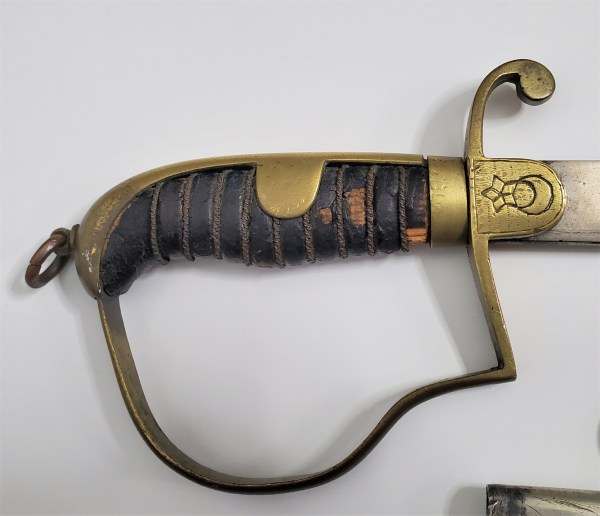
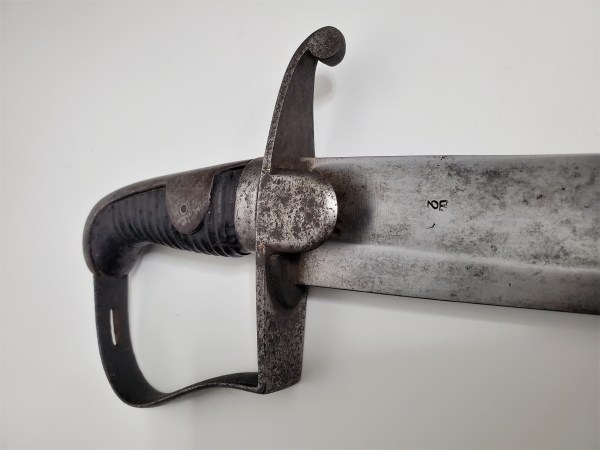
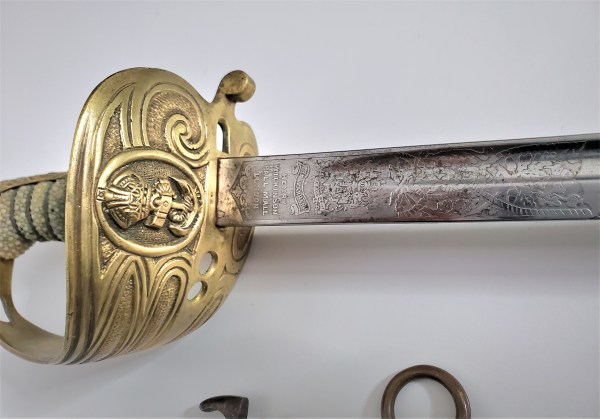
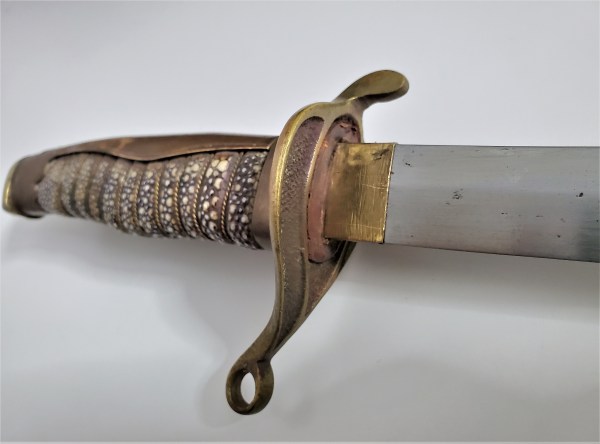
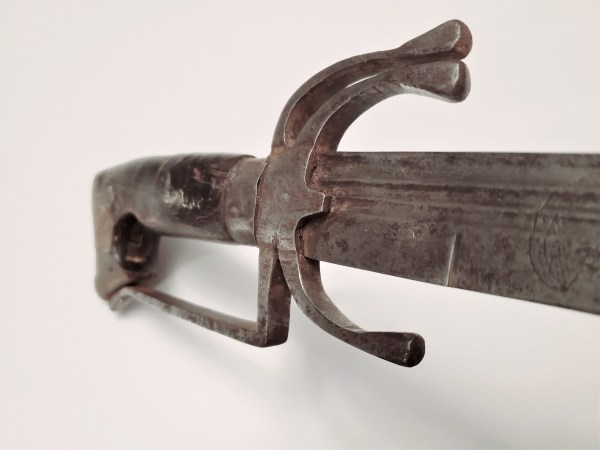
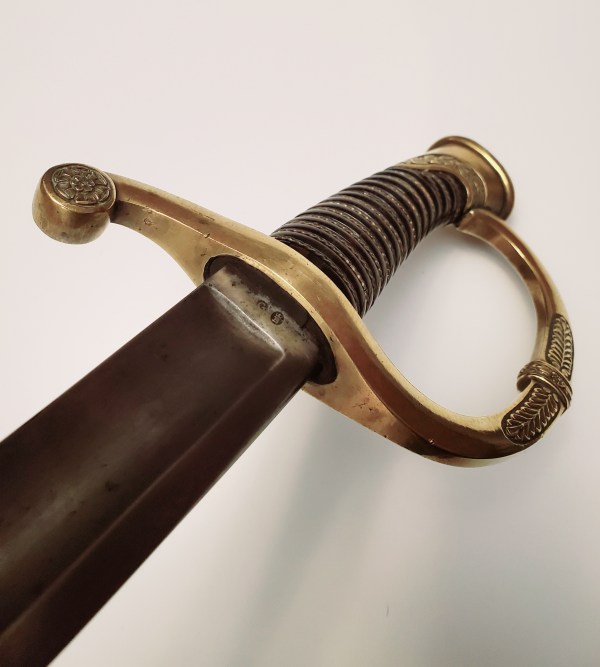
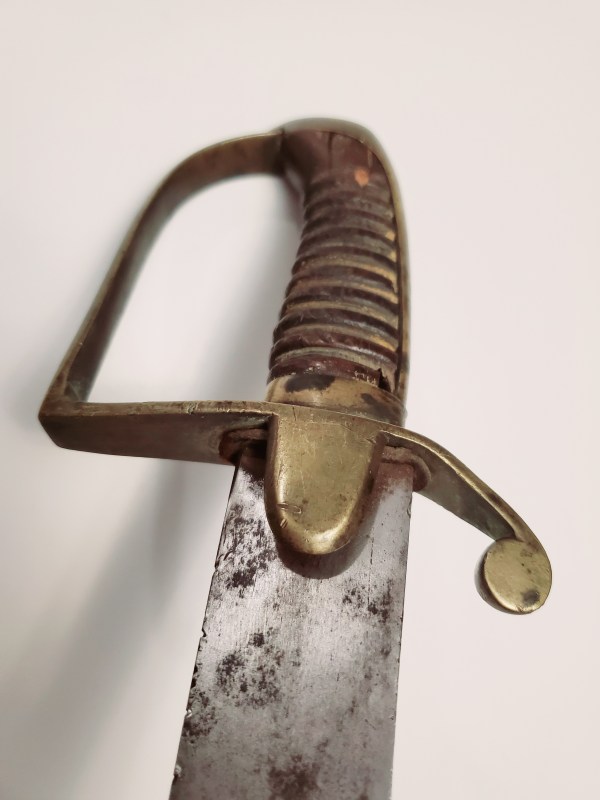
For sale, an interesting piece of WW1 history. A sabre made for the Ottoman army by Luigi Gazzan et fils. Not much seems to be known about the company, other than the fact it is exclusively found on Ottoman swords of the era. The sword went through certain modifications. It was cut down and the... Continue Reading →
SOLD – Rare South African 1896 cavalry sabre
This is a seldom seen South African sabre made in England, but modified to fit the demand of African campaigns. The defining characteristic is the presence of a unique South African sword knot, still in excellent shape. The sword comes with a field scabbard, also in great condition. The blade is marked to Edward VII,... Continue Reading →
SOLD- British 1796 Light cavalry sabre – by Dawes
For sale, an iconic 1796 light cavalry sabre, made by Dawes of Birmingham. This sabre is in surprisingly good shape, is very solid with no rattle. Although the scabbard is in near relic condition, the rest of the sword held up well, especially the blade, which was protected by a thick layer of grease, allowing... Continue Reading →
SOLD – Prussian fussilier sabre
This sabre was made in 1888 for a fusillier officer in Prussian army. It is an uncommon model of great quality. The assembly is extremely solid, with all the proof marks down to the peen. The pipeback blade is in excellent shape, as is the scabbard. SOLD
SOLD- British naval officer sabre – By Wilkinson
This is a very nice example of a best quality Wilkinson sabre made in 1913 by the famous high end sword company. The sword is a solid hilt type, meaning that it does not have the swivel counter-guard that was regulation on this pattern. It was retailed by Gieve Matthews and Seagrove Ltd. The scabbard... Continue Reading →
SOLD – Japanese Police Sword Second Pattern – Meiji era
For sale a rare short sword used by police inspectors during the Meiji era in Japan, starting in 1868, as can be seen by the police badge on the backstrap. This sword is in good shape for the age, with no rattling. The spring latch on the cabbard functions very well. The pommel cap usually... Continue Reading →
SOLD – 1845 French infantry officer sabre – by Coulaux
For sale, a very nice example of the iconic 1845 model for French infantry officers. This model equipped officers from 1845 to 55, but was used by adjudants and sergeant majors until 1916. The sword is in excellent shape, with some minimal surface pitting in a few places. It was service sharpened, and still bears... Continue Reading →
SOLD – 1821 French infantry officer sabre
This is a great quality example of this sabre that was in use in France from 1821 to 1870. This specific example has a high quality hilt, with a light blade that still bears traces of etchings that are now mostly unreadable. The blade was service sharpened. The scabbard is in great shape, with most... Continue Reading →
SOLD – 1821 French infantry officer sabre – Solingen made
For sale, a clean example of the 1821 infantry officer sabre, in use from 1821 to 1845 in the French standing army, and until 1870 in the French National Guard. This sabre has probably been rehitled at some point in it's life, and the leather on the grip was possibly changed. The blade is German... Continue Reading →
SOLD – Moroccan Nimcha Sabre – 19th century
For sale, a very substantial nimcha sabre, a typical weapon of Morocco. This sabre is definetely a fighting weapon, with a German made blade. The sword is fairly long, and was probably meant to be used by a horseman. It is in no way a decorative or ceremonial piece, as can be seen by the... Continue Reading →
SOLD -1829 French Horse Artillery Officer Sabre
This is a rare variant of the 1829 type for horse artillery officers. While the 1829 was the regulation pattern for the horse artilleyr trooper, the officers technically had to carry the1822 light cavalry sabre, but many chose this non regulation type which imitated the 1829, with a lightened blade and decorated hilt. But what... Continue Reading →
SOLD – British Royal Artillery “Spanish pattern” hanger
For sale, a fairly elusive "Spanish pattern" worn by artillerymen of the British Army during the Napoleonic wars. This pattern was introduced during the Peninsular war, hence the name, and was carried until 1826. This example has had a full life. The leather on the grip is gone, but the hilt is in fair shape,... Continue Reading →
SOLD – French 1845 superior officer sabre – North African troops type
This is a good and rather scarce example of an 1845 infantry sabre for superior officer, mounted with a steel hilt in the style of the North African troops. Most of the example that can be found of this non regulation type usually come with the 1855 blade, probably owing to it's great popularity under... Continue Reading →
SOLD – Very rare Austrian 1798 NCO Heavy cavalry Pallasch
This is a very rare and elusive sword designed for non commissioned officers of the Austrian army serving in heavy cavalry regiments in the early days of the Revolutionary and Napoleonic wars. This sword was made by Fischer, and bears all his marks including the arrow. Another interesting detail are the royal monograms of Francis... Continue Reading →
SOLD – WW1 era 1845 artillery officer sabre – by Wilkinson
This is a best quality sword made by Wilkinson sometime around WW1 based on the company's etching. The blade is a bit of a mystery, being devoid of most etchings you would expect to see, as well as sporting no serial number and a rather rare Wilkinson inscription. There is no doubt though that this... Continue Reading →
SOLD – French infantry officer model 1821 fantaisie – by Coulaux
This is a very high quality version of the French 1821 model for infantry officer. The blade was made by Coulaux in Klingenthal, and based on the signature - Coulaux ainé & Cie à Klingenthal - was made around 1840. No poincons are visible. This is a fantaisie piece, meaning that it does not fit... Continue Reading →
Sold – 17th century Walloon hilt cutlass/dussack
This is a rare opportunity to own an early 17th century piece likely German made in the "Walloon hilt" style. While most Walloon hilted swords have straight broad blades, this specific example differs by its short sabre blade, while retaining the pierced steel guard and thumb ring typical of an early Walloon. The guard is... Continue Reading →
Sold – An XI French Briquet – marked
The briquet is one of the most iconic sabres produced during the First Empire. It equipped all line infantry soldiers and was used as a weapon and a tool. This particular example is an An XI pattern (1802) and still shows some of its original marks. The spine is marked Manufacture Impériale, and while unfortunately... Continue Reading →
Sold -1821 British Cavalry Officer pipeback sabre – by Gibbons
This is a gorgeous example of the 1821 officer sabre made by a scarce maker or retailer: J. Gibbons of Canterbury. It is rare that engravings remain on earlier blades as they tend to be fairly shallow, but in this case the blade is in pristine condition. This early Victorian sabre was likely made for... Continue Reading →
Sold – 1845 Rifles Officer Sabre by Mole
For sale this unusual example of a Rifles Officer sabre of the 1845 pattern (with Wilkinson designed blade). The blade is in pristine shape, with no corrosion. The blade is unmarked, except for the usual etchings of a Victorian Rifle Regiment. It does bear the usual proof mark of Mole, one of the top sword... Continue Reading →
Sold- 1845 French Infantry Officer Sabre
This iconic sabre was in use in the French Army from its inception in 1845 until 1916. This specific example is marked to Manufacture de Klingenthal Coulaux ainé et Cie (Factory of Klingenthal, Coulaux Senior and Co.) one of the most prolific sword makers of the 19th century. It bears the inspection marks of B... Continue Reading →
Sold – French 1800 Infantry General Staff Saber
This type of sword is based on the 1800 light infantry officer saber used by officers of Napoleon's Great Army. This specific example is likely to have been used by a general staff officer due to the battle trophies and Athena's helmet found on the langet; a common symbol of the French General Staff, even... Continue Reading →